Showing posts with label Kindergarten. Show all posts

Friday, October 11, 2013

Revised APPR Assessments Part 1: Kindergarten

I didn't really share the outcome of my post-assessments last year, mainly due to the fact that there was some confusion around them with calculations.  In the end, I "passed" and did all right, but my results weren't exactly where I wanted them to be for the post-assessment scores.  Thus, I revamped two of my assessments.  Last year, I did my SLO assessments in 5th, 2nd, 1st and Kindergarten.  My LLO was in 4th grade.  Lucky for me, I have one less to do this year!  This year, my SLO assessments are with Studio Art, Art 7, and 1st grade and I chose to use Kindergarten for my LLO so I could revamp my rubrics.

Today is our first Staff Development day and luckily, I have no place to be except in my classrooms working on my SLOs and LLO, which are technically due today!  In the next few posts, I'm going to share with you my old assessments from last year and what I plan on doing differently this year.  I'll also share with you how I am setting my goals, as I am doing something completely different this year as well.

Last year I did a cutting and gluing rubric and I had a 97% success rate at students passing, which was great, but made it seem as though the assessment wasn't quite as rigorous as it should have been.  So, this year, I changed up my plans for the Kindergarten assessment, and I've actually changed my mind twice about the pre-assessment.  Back in September I shared a post with my ideas for this year, which you can see here.  I originally gave students a shape sheet with fewer shapes and then a quiz that quizzed them on shapes, lines and basic color theory.  I was struggling to figure out how I would make sure those kinders could read their color words by the end of the year to take a "quiz" (since I would essentially have to create a test bank), and then I decided to scratch that idea, after I had already given out that assessment.

Now, I've decided to continue using the shape sheet for cutting and gluing but also the Hey Diddle Diddle Shape Cow project we just did.  This way, I am still assessing their cutting and gluing skills, but also their ability to draw shapes, their use of crayons and how they color.  As I looked at all of these projects, I realized that even though I was trying to teach them how to use the shapes and how to color properly, it's going to take a while for them to improve, so I should still be able to show growth.

  
These are the two activities being used for the kindergarten pre-assessment...

And these are the two rubrics being used for the kindergarten pre-assessments...

At the end of the year, students will then be assessed on cutting & gluing, as well as their coloring and shape skills all in one project...the primary playground project!  In that project, students have to cut out their own shapes and create a playground.  It will assess their ability to cut out shapes that are discernible from one another, how well they glue the shapes down (still using the dot glue method), and how well they utilize their entire paper.  Last year I did this as a review projects for primary colors and shapes, but it'll make a great end of the year assessment, I think.  Instead of having the students do it on 9"x12" paper, I'll give them the bigger sheets like I did for their pre-assessment cows.
 
Two kindergarten examples from last year, done back in February.

And this is the revamped rubric for assessing the post-assessment.

I know these rubrics are hard to read...I'm doing this at school right now and don't have a nicer way of taking a screen shot, so you can find them on the SmARTteacher.

Tuesday, June 18, 2013

Kindergarten Post Assessment Results

I am happy to say that I reached my 80% goal in the growth department for my kindergarten SLO!  My goal was stated something like this: "80% of students (39) will reach a score in the satisfactory grade level (72%-80%)."  I did low-ball it for the grade level that they would reach, but that's what we were told to do.  I almost think that next year I'd rather state my SLO's more like this, "80% of students will score 6 points more on their post-assessment."

That being said, I will share that I was successful on my 5th grade SLO at reaching my goal as well.  Only about 65% of my students reached the goal on the 1st grade SLO, and less than that on my 2nd grade SLO.  After discussing it with the art teacher who graded my assessments, we both think it's because the scavenger hunt was just too difficult of a task for their level.  My 1st grade rubric for the 6-square drawing assignment also needs to be revamped into more of a check-list.  It was hard to grade the post-assessments based on what the rubric said because many students had great horizon lines and backgrounds, but weren't as successful with the subject matter.  My rubric dealt more with the subject matter and didn't allow for points to be scored for the craftsmanship in each square, if there was any.  But more on that SLO in a later post.

I posted about my SLO's when I started blogging back in July...you can see my original post here.  I did have to change my grading rubric due to the changes in how our assessments had to be graded at the end of the year.  Since I had to swap assessments with another art teacher, presumably one who does not work in the district and would not be there to observe student's cutting skills, I had to take out any observational categories in the rubric (such as students knowing what hand to hold their scissors in).  Here is my updated rubric that I used for the pre- and post-assessment.


The following are examples of student's pre- and post-assessments.  The pre-s are on the left and the post-s are on the right.

Improvement at being more precise.


Improvement with composition as well as preciseness at cutting on the lines.


Improvement at cutting on the lines more precisely.


Another improvement with speed and also the length of the snips with scissors.


This student had really great control over the scissors at the beginning of the year, but took too long to cut things out!  She always needed an extra day on projects in order to finish them, but she was able to finish her post-assessment in one day!

Sunday, June 16, 2013

Popsicle Stick Drawings

I've already shared one of my end-of-the-year staple Kindergarten projects, the rainbow cities, and here is the second!  I started this one my first year of teaching as the last project the kiddos do, and it has stuck.  I like to use it because by this point, the kids are crazy and excited about summer vacation and I'm often trying to get my room organized and get artwork passed back to students to take home.

On the first day, I give students about 15 minutes and a handful of Popsicle sticks.  They aren't allowed any glue yet.  We talk about using the sticks to make a skeleton of their drawing.  They can create a realistic picture (houses, people fences, etc.) or an abstract picture full of shapes and colors.  They get 15 minutes to rearrange the sticks and then when I approve their design, they get to glue the Popsicle sticks down.  (Also, they aren't allowed to stack the sticks tall on the paper.)

I think this Popsicle stick drawing was the most creative one this year!  First time I've had a student think about doing a rocket ship!  Love it!

On the second day, they finish their drawings.  We use markers to color the Popsicle sticks and crayons for the background.  A lot of the time, some of these are just random scribbles and leaning more towards the abstract side, but I can always tell which students are really into art, their composition and still willing to be creative and think about their project at the end of the year based on their designs!


Tuesday, February 19, 2013

Primary Playgrounds: A Review in Shape and Primary Colors!

I saw this project on Pinterest (the link on Pinterest takes you to the K-8 Art blog...) so I used it and altered it to my students.  I did this for my Kindergarteners as an "in-between" filler projects between units.  Two of my three classes have done this project, and the other will be doing it this week while the other two classes catch up.

The teacher at K-8 Art described giving each table a tray of pre-cut shapes, however since I've been working on shapes since the beginning of the year, I simply gave each student a 4"x6" piece of  red, yellow and blue construction paper.  This was a great review of the primary colors, as well as shapes.  

Before beginning, I showed students the three colors and asked what they knew or remembered about them.  I'd say a good 2/3 of the class remembered they were called the primary colors, which is promising!  I then showed them the examples from the K-8 Art blog and then reviewed with students the shapes that were used to build the playgrounds.

We took one day to cut and glue (with glue sticks) the playground together, and then another day to color the background (which was another good review for craftsmanship, details and a horizon line!).  Since my pre- and post-assessment in Kindergarten for APPR deals with cutting and gluing shapes, this is an excellent review for the middle of the year!  (Disclaimer:  My rubric from the Kindergarten assessments has since changed from my original plan...too much to grade in those, and unusable since the requirement was put in place that someone else must grade your student's post-assessments.)  I actually think that I might inocorporate this next year for my pre- and post-assessment instead of the worksheet to make it more of an artistic assessment!


Monday, January 28, 2013

Jasper Johns & Random Acts of Kindness

This post is a two-part"er"...First, I want to share this short little article that will be going out to the local newspapers!


During the month of December, elementary students at Edwards-Knox School participated in a “Random Acts of Kindness” challenge.  They were asked to do a random act of kindness for someone without expecting anything in return.  As part of the challenge, the elementary counselor, Mrs. Deleel and art teacher, Mrs. Impey, challenged the students to a penny war to benefit the Potsdam Humane Society.  Over the course of four weeks, students raised $704 for PHS!  Students also brought in donations of pet treats and cleaning supplies for the shelter and a class of 3rd grade students created wire sculptures of cats and dogs to hang in the shelter.  The 1st grade class, pictured here, brought in the most change during the challenge, $171!  Congratulations students at EK!  You should be proud of what you did together!

----------------------------------------------------------------------------------------------------------

Secondly, I would like to share our finished Kindergarten Jasper Johns projects.  We created two artworks in this unit.  First, after the introduction to Jasper Johns, we created a simple 0-9 number artwork.  I taught students how to turn their numbers into bubble numbers.  We drew the numbers with markers and then colored the background with crayons.  This project most definitely covers COMMON CORE MATH standards with the younger students.  Recognizing numbers, writing their numbers, and putting the numbers in order.  This project could be changed in an infinite number of ways...count by two's...count by 5's, count by 10's...even numbers, odd numbers, etc. etc. 


For the final project, I had students fold their own paper to make 16 squares and we numbered 0-9 again.  When we ran out of numbers, we started back at 0.  For this project, I introduced oil pastels. 


I did this project with the special needs class.  These two students have very poor motor skills, so instead of drawing their numbers, they had to trace a number pattern.


Saturday, January 26, 2013

A Little Bit of NYS Common Core...TEXT HEAVY POST!

Friday was the last day of the 2nd quarter.  Usually we have a half day with students and a half day of time for grading and submitting report card grades, however yesterday, they cancelled school with the students and gave us a full day of staff development regarding the Common Core.  I'll have to admit, at first I was a little annoyed and not really sure how this was going to connect to my subject area, but alas, I was pleasantly surprised!

I didn't have to attend any of the common core meetings about math, but I was asked to attend the 1st-2nd grade ELA Common Core meeting.  Here's what I learned there:

NYS contracted out to a company called Core Knowledge to create  K-2 curriculum for the listening and learning strand of the Common Core.  Since the younger students, especially Kinders and 1st graders, aren't at a high enough reading level yet to start reading in-depth texts, the Common Core focuses more on listening to text for comprehension and decoding.  In other words, teachers at these younger levels are asked to do more read-a-loud activities with students for "Listening to Learn."  This right there took a little bit of weight off my shoulders...all along I've thought, how am I supposed to incorporate reading with my kinders?  Well, I don't necessarily have to have the Kinders read on their own (aside from my art sight words...shape words, color words, etc.) but it's OK to do read-a-louds with them!

The idea behind doing more read-a-louds at this younger age is that students will begin to have a larger vocabulary for when they do start reading.  There were some great statistics that I can't remember from the presentation...about students from fluent families (families who read to their kids at home) versus students from poverty (who don't get reading at home) and their drop out rates from school...and they obviously showed that students who are read to at home at a younger age, have a higher chance of graduating school.

Another thing is that these grade levels should be reading 50% fiction and 50% non-fiction works throughout the year.

Anyways, back to the exciting part.  Our school district is adopting the curriculum map created by Core Knowledge for K-2, and I rather like it!  Each year builds upon the other year and incorporates science and history in the younger grades.  The curriculum currently has 9 strands, or units, for the school year (before next year, three more NYS specific strands will be added).  Again, these units are just for the listening and learning strand of common core...not writing, reading, math, etc.

Here are what the current strands are and my brainstorming for extension activities in art class:

Kindergarten
Nursery Rhymes and Fables (3 weeks)
The Human Body: Five Senses (3 weeks): self-portraits, artwork with texture
Stories (3 weeks): Elmer, listen to a story and draw a picture from listening to the details
Plants (3 weeks)
Farms (3 weeks): drawing shape barns and animals, incorporating a background
Kings and Queens (3 weeks): design a crown
Seasons and Weather (3 weeks): trees in the different seasons, background details
Colonial Towns and Townspeople (3 weeks)
Taking Care of Earth (3 weeks): recyclable art

Now, some of these might not fall where I'd like them to, but it's okay for me to do a fall season tree drawing in the fall, even though the seasons unit won't happen until probably spring time...this will help the students have background knowledge in the unit when it happens in class.

1st Grade
Different Lands Similar Stories (2 weeks): Compare artwork from different cultures/styles that are of the same subject/story...i.e. compare Van Gogh's Bedroom at Arles with Lichtenstein's Bedroom at Arles...compare Mona Lisa with modern parodies of Mona Lisa and then draw your own modern Mona Lisa!
Fables and Stories (3 weeks)
The Human Body: Body Systems, Germs, Diseases and Preventing Illness (3 weeks): color mixing by squirting paint on hands and shaking hands...connect the spread of colds with the mixing of the paint all while reviewing primary and secondary colors....draw germs using organic shapes
Early World Civilizations (4 weeks): Cave art
Early American Civilizations (4 weeks): Native Americans, Colonial Quilts
Astronomy (2 weeks)
Animals and Habitats (3 weeks): shape animals with depth and appropriate background (fits right in with my shape animal unit I already did!)
Fairy Tales (2 weeks)
History of Earth (3 weeks) My dinosaur unit will fit great here! Plus, it will get both 1st grade teachers on the same page with what they teach...they'll both be doing the dinosaur unit before they go on their field trip to Dinosaur World!


2nd Grade
Fighting for a Cause (4 weeks) This unit is about people like Martin Luther King Jr., Rosa Parks, etc.
Fair Tales and Tall Tales (2 weeks)
Cycles in Nature (3 weeks): Eric Carle, catterpillar to butterfly
Insects (3 weeks): viewpoint drawings...view from a bug...
Ancient Greek Civilizations (3 weeks): pottery with patterns
Greek Myths (3 weeks)
Early Asian Civilizations (3 weeks): Chinese New Year
Charlotte's Web I & II (two 3 week units): This unit is one the 2nd grade teacher is going to try out this year and suggested a large paper-mache type sculpture of Charlotte herself!
Immigration (3 weeks): Statue of Liberty, Keith Haring


Saturday, January 5, 2013

Christmas Wrap Up: Kindergarten Projects

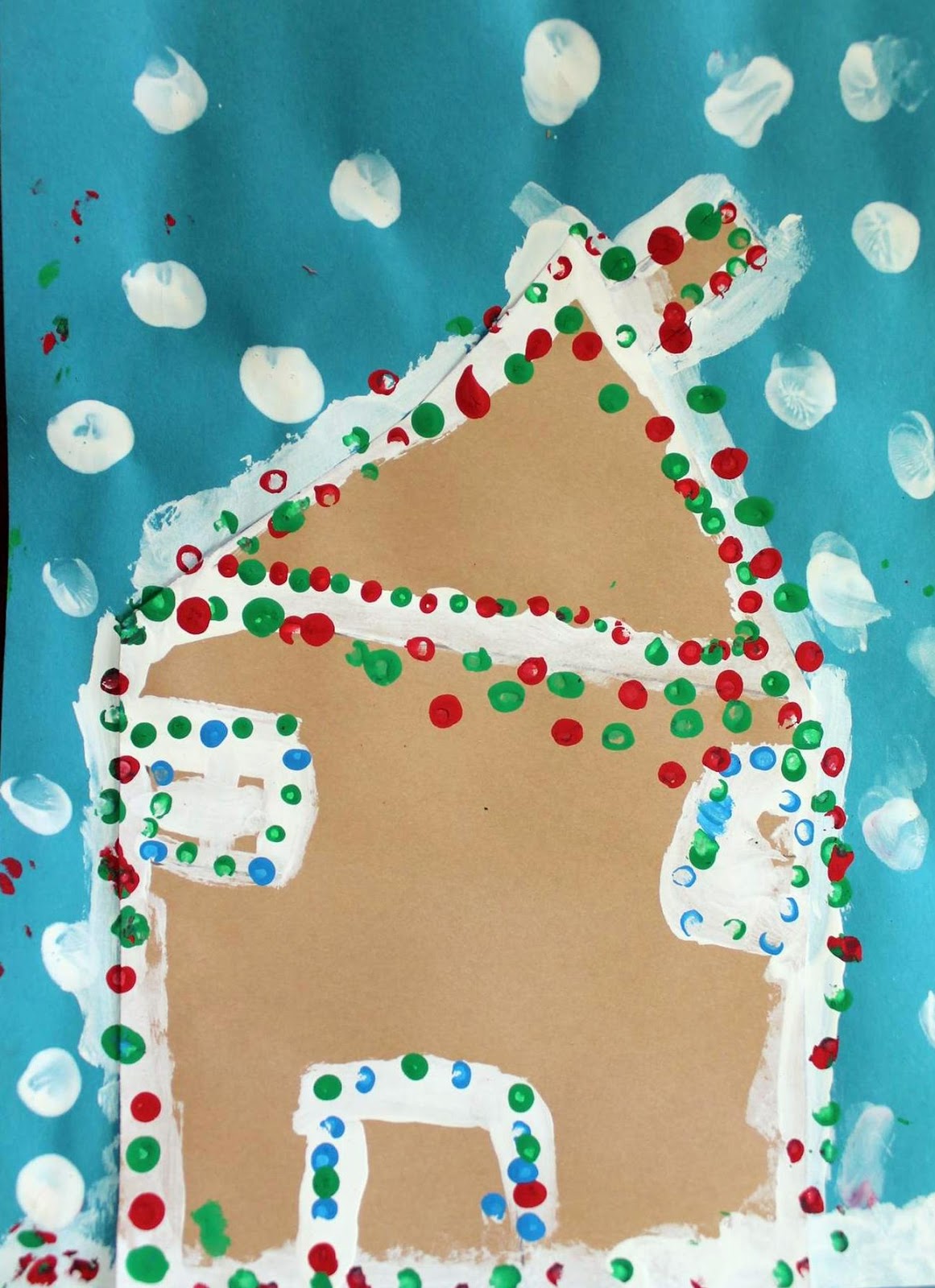
Here are some of our finished kindergarten projects from before break.  Everyone did gingerbread houses, where we talked about drawing a house using shapes, as well as patterns.


The other project was a one-day project I did with 2 of the 3 kindergarten classes as a filler before break.  For this project, we drew Santa Claus, step-by-step, together.